Sub-Zero Refrigerator Repair
Sub-Zero Suddenly Loud? Telling Normal Hum From a Real Fault
A fridge that gets loud all of a sudden usually has a fan scraping frost, a dusty condenser, an ice maker valve buzzing for water or a compressor running too long. A steady hum, a short gurgle or falling cubes are normal. Here is how to tell them apart.
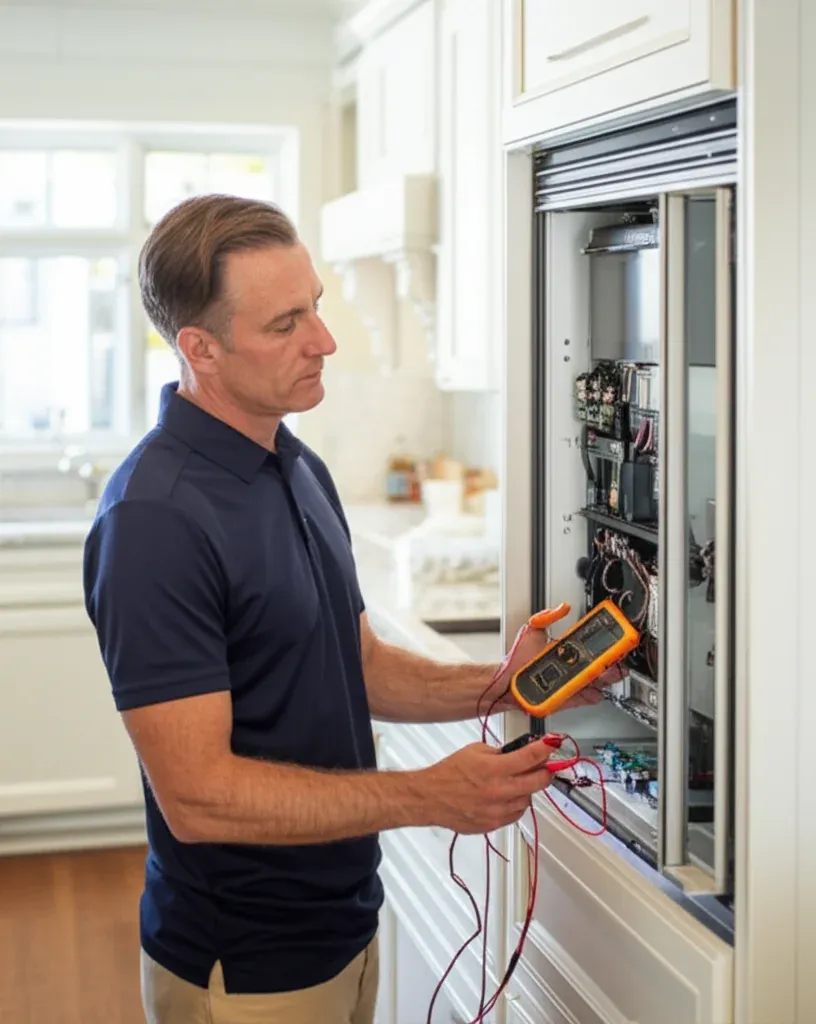
A refrigerator that turns loud all of a sudden usually has one of four problems: an evaporator fan blade scraping on frost, a condenser fan or coil packed with dust, a water valve buzzing because the ice maker wants water it cannot get, or a compressor running far longer than it should. Open the freezer door and listen. If a ticking or buzzing stops the instant the door opens, it is almost always the evaporator fan, because many refrigerators cut that fan when the door switch trips. A steady low hum, a brief gurgle or the thump of cubes landing in the bin is normal.
On a panel-ready Sub-Zero set flush in the cabinetry, the machinery breathes and sounds through one grille, so any new rattle carries straight into the room.
What a healthy Sub-Zero sounds like
The compressor gives a low, even hum while it works and then goes quiet. A variable speed compressor ramps that hum up and down instead of switching hard on and off. Refrigerant moving through the tubing can gurgle or hiss for a minute after the compressor starts or stops. The liner cracks and pops as it warms and cools, most of all during a defrost, and a faint sizzle at that moment is meltwater dripping onto the defrost heater. The ice maker adds a short buzz of a few seconds while the valve fills the tray, then a clatter as cubes drop.
Silence is part of the pattern too; quiet only matters when temperatures are rising.
Noises that point to a real fault
A scrape, tick or buzz that stops when the door opens
This is the evaporator fan, and it usually gets loud because frost has grown around the blades. Frost there means the defrost system has stopped clearing the coil, so the fan is the messenger rather than the culprit. You can melt heavy ice yourself. For Classic (CL) and Designer (DET, DEC) models, Sub-Zero’s advice is to power down and warm the ice with a hair dryer set low, never holding it in one spot. PRO Series owners should use a handheld steamer, not a hair dryer. If the noise is back within a few days, the defrost heater, thermostat or sensor needs a technician, typically $310–$720, or $300–$620 if the fan motor itself is worn.
A rattle or whine from the grille
A noise from the grille usually means the condenser fan, or a coil furred with dust and pet hair. On Classic (CL) units the condenser sits behind the flip-up grille; on Designer (DET, DEC) units it hides behind a kickplate held by two screws. Turn the unit off at its control panel, wear gloves and vacuum with a soft brush, following the fins rather than crossing them. The USDA suggests keeping the front grill clear of lint and brushing the coil several times a year. Sub-Zero adds that a unit under six months old needs no condenser cleaning yet.
A buzz that repeats every few minutes
When the ice maker is on but the supply is shut, kinked or frozen, the inlet valve keeps opening against nothing and buzzes each time. Switch the ice maker off until the water is sorted. If the supply is fine and the buzzing continues, the valve or line is the likely repair, typically $290–$660. Our note on what a bad cube tells you about the ice maker covers the same system.
A compressor that never takes a break
A display showing EC50 with Service flashing means the refrigerator compressor has been running excessively. On 600, 648PRO and 700 Series units, EC40 is the freezer version and can also point to a door left ajar, a fan, a sensor or the sealed system. When an EC50 appears but the compartments are holding near their set points, vacuum the condenser, then press the bell (door ajar alarm) key and keep it down for 15 seconds to clear the code. A fresh food reading over 48 degrees on a 38 setting is another matter: in Sub-Zero’s view a coil cleaning will probably not bring it back, so book the visit. Repeated clicking from the machinery while the box warms suggests the compressor is struggling to start; sealed-system work typically runs $1,020–$2,220.
When the noise is the alarm
A chime that will not stop is the control asking for attention. On Legacy Classic (BI) units the wrench tells you how serious it is: flashing alongside the chime means a major error code is stored, and a wrench that stays lit marks a minor fault that is not yet putting the food at risk. Pressing ALARM and POWER at the same moment and releasing them inside 5 seconds mutes the chime, but only by hiding the indicator for 24 hours. Write the code down first. Codes beginning 35 are fan faults, such as 35 F 33 for the freezer evaporator fan or 35 r 34 for the refrigerator one: switch the breaker off for 30 seconds, then call for service.
Is a loud refrigerator dangerous?
Usually not, since noise signals wear or a blocked part. The exceptions are a burning smell, a harsh electrical buzz or a breaker that keeps tripping; in any of those cases turn the unit off at the breaker. With the power cut, keep the doors shut. Sub-Zero puts it at roughly 3 hours for an empty unit before the fresh food section tops 45°F (7°C), and the freezer’s own line, 20°F (-6°C), is crossed on the same clock.
Getting it diagnosed
Sub-Zero Repair Newton is an independent repair service that works only on refrigeration. You pay $95 for the visit, the diagnosis is finished before any work is quoted, and saying yes to the repair means that $95 is subtracted from its price. Before calling (617) 396-3696, note what the noise sounds like, when it happens, whether it stops with the door open and any code on the display. Details are on our Sub-Zero refrigerator repair page, and we visit homes in Newton Centre, Oak Hill, Newton Highlands and Belmont.
Still asked on the phone
What does it mean when the buzzing stops as soon as the door opens?
That pattern almost always points to the evaporator fan, which many refrigerators switch off while a door is open. A fan that has started buzzing or ticking is usually brushing against frost, which means the defrost system is no longer clearing the coil. Melting the ice quiets it for a while, but if the noise comes back the defrost fault needs a technician.
Is it normal for a fridge to stop making noise?
Yes, short quiet spells are normal because the compressor and fans rest once the compartments reach their set temperature. Silence only becomes a concern when it lasts for hours and the temperatures climb, which can mean a failed control, compressor or fan. Put a thermometer in the fresh food section before assuming anything.
Is a noisy fridge dangerous?
A noisy refrigerator is rarely dangerous, since most new sounds come from a worn fan, frost or a dusty condenser. Treat it as urgent if you notice a burning smell, a harsh electrical buzz or a breaker that keeps tripping: switch the unit off at the breaker and call for service.
Why is my fridge buzzing at night?
Most night-time buzzing is the same sound the refrigerator makes all day, only easier to hear once the house goes quiet. Ice maker refills, compressor runs and defrost cycles keep their own schedule around the clock. A buzz every few minutes with the ice maker on and the water off is the inlet valve, and switching the ice maker off stops it.
How long do refrigerators usually last?
A typical freestanding refrigerator is often replaced after roughly 10 to 15 years, while built-in refrigeration is designed to be repaired rather than swapped out. For a built-in, one repair such as a fan, valve or defrost part usually costs far less than a comparable new unit, so a sudden noise on its own is rarely a reason to replace.